

SSCP 試験問題 656
Which of the following is the MOST important aspect relating to employee termination?
正解: D
Explanation/Reference:
Even though Logical access to information by a terminated employee is possible if the ID and password of the terminated employee has not been deleted this is only one part of the termination procedures. If user ID is not disabled or deleted, it could be possible for the employee without physical access to visit the companies networks remotely and gain access to the information.
Please note that this can also be seen in a different way: the most important thing to do could also be to inform others of the person's termination, because even if user ID's and passwords are deleted, a terminated individual could simply socially engineer their way back in by calling an individual he/she used to work with and ask them for access. He could intrude on the facility or use other weaknesses to gain access to information after he has been terminated.
By notifying the appropriate company staff about the termination, they would in turn intitiate account termination, ask the employee to return company property, and all credentials would be withdrawn for the individual concerned. This answer is more complete than simply disabling account.
It seems harsh and cold when this actually takes place , but too many companies have been hurt by vengeful employees who have lashed out at the company when their positions were revoked for one reason or another. If an employee is disgruntled in any way, or the termination is unfriendly, that employee's accounts should be disabled right away, and all passwords on all systems changed.
For your exam you should know the information below:
Employee Termination Processes
Employees join and leave organizations every day. The reasons vary widely, due to retirement,reduction in force, layoffs, termination with or without cause, relocation to another city, careeropportunities with other employers, or involuntary transfers. Terminations may be friendly or unfriendly and will need different levels of care as a result.
Friendly Terminations
Regular termination is when there is little or no evidence or reason to believe that the termination is not agreeable to both the company and the employee. A standard set of procedures, typically maintained by the human resources department, governs the dismissal of the terminated employee to ensure that company property is returned, and all access is removed. These procedures may include exit interviews and return of keys, identification cards, badges, tokens, and cryptographic keys. Other property, such as laptops, cable locks, credit cards, and phone cards, are also collected. The user manager notifies the security department of the termination to ensure that access is revoked for all platforms and facilities.
Some facilities choose to immediately delete the accounts, while others choose to disable the accounts for a policy defined period, for example, 30 days, to account for changes or extensions in the final termination date. The termination process should include a conversation with the departing associate about their continued responsibility for confidentiality of information.
Unfriendly Terminations
Unfriendly terminations may occur when the individual is fired, involuntarily transferred, laid off,or when the organization has reason to believe that the individual has the means and intention to potentially cause harm to the system. Individuals with technical skills and higher levels of access, such as the systems administrators, computer programmers, database administrators, or any individual with elevated privileges, may present higher risk to the environment. These individuals could alter files, plant logic bombs to create system file damage at a future date, or remove sensitive information. Other disgruntled users could enter erroneous data into the system that may not be discovered for several months. In these situations, immediate termination of systems access is warranted at the time of termination or prior to notifying the employee of the termination. Managing the people aspect of security, from pre-employment to postemployment, is critical to ensure that trustworthy, competent resources are employed to further the business objectives that will protect company information. Each of these actions contributes to preventive, detective, or corrective personnel controls.
The following answers are incorrect:
The other options are less important.
Following reference(s) were/was used to create this question:
CISA review manual 2014 Page number 99
Harris, Shon (2012-10-18). CISSP All-in-One Exam Guide, 6th Edition (p. 129). McGraw-Hill. Kindle Edition.
Even though Logical access to information by a terminated employee is possible if the ID and password of the terminated employee has not been deleted this is only one part of the termination procedures. If user ID is not disabled or deleted, it could be possible for the employee without physical access to visit the companies networks remotely and gain access to the information.
Please note that this can also be seen in a different way: the most important thing to do could also be to inform others of the person's termination, because even if user ID's and passwords are deleted, a terminated individual could simply socially engineer their way back in by calling an individual he/she used to work with and ask them for access. He could intrude on the facility or use other weaknesses to gain access to information after he has been terminated.
By notifying the appropriate company staff about the termination, they would in turn intitiate account termination, ask the employee to return company property, and all credentials would be withdrawn for the individual concerned. This answer is more complete than simply disabling account.
It seems harsh and cold when this actually takes place , but too many companies have been hurt by vengeful employees who have lashed out at the company when their positions were revoked for one reason or another. If an employee is disgruntled in any way, or the termination is unfriendly, that employee's accounts should be disabled right away, and all passwords on all systems changed.
For your exam you should know the information below:
Employee Termination Processes
Employees join and leave organizations every day. The reasons vary widely, due to retirement,reduction in force, layoffs, termination with or without cause, relocation to another city, careeropportunities with other employers, or involuntary transfers. Terminations may be friendly or unfriendly and will need different levels of care as a result.
Friendly Terminations
Regular termination is when there is little or no evidence or reason to believe that the termination is not agreeable to both the company and the employee. A standard set of procedures, typically maintained by the human resources department, governs the dismissal of the terminated employee to ensure that company property is returned, and all access is removed. These procedures may include exit interviews and return of keys, identification cards, badges, tokens, and cryptographic keys. Other property, such as laptops, cable locks, credit cards, and phone cards, are also collected. The user manager notifies the security department of the termination to ensure that access is revoked for all platforms and facilities.
Some facilities choose to immediately delete the accounts, while others choose to disable the accounts for a policy defined period, for example, 30 days, to account for changes or extensions in the final termination date. The termination process should include a conversation with the departing associate about their continued responsibility for confidentiality of information.
Unfriendly Terminations
Unfriendly terminations may occur when the individual is fired, involuntarily transferred, laid off,or when the organization has reason to believe that the individual has the means and intention to potentially cause harm to the system. Individuals with technical skills and higher levels of access, such as the systems administrators, computer programmers, database administrators, or any individual with elevated privileges, may present higher risk to the environment. These individuals could alter files, plant logic bombs to create system file damage at a future date, or remove sensitive information. Other disgruntled users could enter erroneous data into the system that may not be discovered for several months. In these situations, immediate termination of systems access is warranted at the time of termination or prior to notifying the employee of the termination. Managing the people aspect of security, from pre-employment to postemployment, is critical to ensure that trustworthy, competent resources are employed to further the business objectives that will protect company information. Each of these actions contributes to preventive, detective, or corrective personnel controls.
The following answers are incorrect:
The other options are less important.
Following reference(s) were/was used to create this question:
CISA review manual 2014 Page number 99
Harris, Shon (2012-10-18). CISSP All-in-One Exam Guide, 6th Edition (p. 129). McGraw-Hill. Kindle Edition.
SSCP 試験問題 657
Which of the following backup methods is most appropriate for off-site archiving?
正解: C
The full backup makes a complete backup of every file on the system every
time it is run. Since a single backup set is needed to perform a full restore, it is appropriate
for off-site archiving.
Source: KRUTZ, Ronald L. & VINES, Russel D., The CISSP Prep Guide: Mastering the
Ten Domains of Computer Security, John Wiley & Sons, 2001, Chapter 3:
Telecommunications and Network Security (page 69).
time it is run. Since a single backup set is needed to perform a full restore, it is appropriate
for off-site archiving.
Source: KRUTZ, Ronald L. & VINES, Russel D., The CISSP Prep Guide: Mastering the
Ten Domains of Computer Security, John Wiley & Sons, 2001, Chapter 3:
Telecommunications and Network Security (page 69).
SSCP 試験問題 658
Secure Shell (SSH-2) supports authentication, compression, confidentiality, and integrity, SSH is commonly used as a secure alternative to all of the following protocols below except:
正解: D
Explanation/Reference:
HTTPS is used for secure web transactions and is not commonly replaced by SSH.
Users often want to log on to a remote computer. Unfortunately, most early implementations to meet that need were designed for a trusted network. Protocols/programs, such as TELNET, RSH, and rlogin, transmit unencrypted over the network, which allows traffic to be easily intercepted. Secure shell (SSH) was designed as an alternative to the above insecure protocols and allows users to securely access resources on remote computers over an encrypted tunnel. SSH's services include remote log-on, file transfer, and command execution. It also supports port forwarding, which redirects other protocols through an encrypted SSH tunnel. Many users protect less secure traffic of protocols, such as X Windows and VNC (virtual network computing), by forwarding them through a SSH tunnel. The SSH tunnel protects the integrity of communication, preventing session hijacking and other man-in-the-middle attacks. Another advantage of SSH over its predecessors is that it supports strong authentication. There are several alternatives for SSH clients to authenticate to a SSH server, including passwords and digital certificates.
Keep in mind that authenticating with a password is still a significant improvement over the other protocols because the password is transmitted encrypted.
The following were wrong answers:
telnet is an incorrect choice. SSH is commonly used as an more secure alternative to telnet. In fact Telnet should not longer be used today.
rlogin is and incorrect choice. SSH is commonly used as a more secure alternative to rlogin.
RSH is an incorrect choice. SSH is commonly used as a more secure alternative to RSH.
Reference(s) used for this question:
Hernandez CISSP, Steven (2012-12-21). Official (ISC)2 Guide to the CISSP CBK, Third Edition ((ISC)2 Press) (Kindle Locations 7077-7088). Auerbach Publications. Kindle Edition.
HTTPS is used for secure web transactions and is not commonly replaced by SSH.
Users often want to log on to a remote computer. Unfortunately, most early implementations to meet that need were designed for a trusted network. Protocols/programs, such as TELNET, RSH, and rlogin, transmit unencrypted over the network, which allows traffic to be easily intercepted. Secure shell (SSH) was designed as an alternative to the above insecure protocols and allows users to securely access resources on remote computers over an encrypted tunnel. SSH's services include remote log-on, file transfer, and command execution. It also supports port forwarding, which redirects other protocols through an encrypted SSH tunnel. Many users protect less secure traffic of protocols, such as X Windows and VNC (virtual network computing), by forwarding them through a SSH tunnel. The SSH tunnel protects the integrity of communication, preventing session hijacking and other man-in-the-middle attacks. Another advantage of SSH over its predecessors is that it supports strong authentication. There are several alternatives for SSH clients to authenticate to a SSH server, including passwords and digital certificates.
Keep in mind that authenticating with a password is still a significant improvement over the other protocols because the password is transmitted encrypted.
The following were wrong answers:
telnet is an incorrect choice. SSH is commonly used as an more secure alternative to telnet. In fact Telnet should not longer be used today.
rlogin is and incorrect choice. SSH is commonly used as a more secure alternative to rlogin.
RSH is an incorrect choice. SSH is commonly used as a more secure alternative to RSH.
Reference(s) used for this question:
Hernandez CISSP, Steven (2012-12-21). Official (ISC)2 Guide to the CISSP CBK, Third Edition ((ISC)2 Press) (Kindle Locations 7077-7088). Auerbach Publications. Kindle Edition.
SSCP 試験問題 659
Which of the following floors would be most appropriate to locate information processing facilities in a 6- stories building?
正解: C
Explanation/Reference:
You data center should be located in the middle of the facility or the core of a building to provide protection from natural disasters or bombs and provide easier access to emergency crewmembers if necessary. By being at the core of the facility the external wall would act as a secondary layer of protection as well.
Information processing facilities should not be located on the top floors of buildings in case of a fire or flooding coming from the roof. Many crimes and theft have also been conducted by simply cutting a large hole on the roof.
They should not be in the basement because of flooding where water has a natural tendancy to flow down
:-) Even a little amount of water would affect your operation considering the quantity of electrical cabling sitting directly on the cement floor under under your raise floor.
The data center should not be located on the first floor due to the presence of the main entrance where people are coming in and out. You have a lot of high traffic areas such as the elevators, the loading docks, cafeteria, coffee shopt, etc.. Really a bad location for a data center.
So it was easy to come up with the answer by using the process of elimination where the top, the bottom, and the basement are all bad choices. That left you with only one possible answer which is the third floor.
Source: HARRIS, Shon, All-In-One CISSP Certification Exam Guide, 5th Edition, Page 425.
You data center should be located in the middle of the facility or the core of a building to provide protection from natural disasters or bombs and provide easier access to emergency crewmembers if necessary. By being at the core of the facility the external wall would act as a secondary layer of protection as well.
Information processing facilities should not be located on the top floors of buildings in case of a fire or flooding coming from the roof. Many crimes and theft have also been conducted by simply cutting a large hole on the roof.
They should not be in the basement because of flooding where water has a natural tendancy to flow down
:-) Even a little amount of water would affect your operation considering the quantity of electrical cabling sitting directly on the cement floor under under your raise floor.
The data center should not be located on the first floor due to the presence of the main entrance where people are coming in and out. You have a lot of high traffic areas such as the elevators, the loading docks, cafeteria, coffee shopt, etc.. Really a bad location for a data center.
So it was easy to come up with the answer by using the process of elimination where the top, the bottom, and the basement are all bad choices. That left you with only one possible answer which is the third floor.
Source: HARRIS, Shon, All-In-One CISSP Certification Exam Guide, 5th Edition, Page 425.
SSCP 試験問題 660
During which phase of an IT system life cycle are security requirements developed?
正解: C
Section: Security Operation Adimnistration
Explanation
Explanation/Reference:
The software development life cycle (SDLC) (sometimes referred to as the System Development Life Cycle) is the process of creating or altering software systems, and the models and methodologies that people use to develop these systems.
The NIST SP 800-64 revision 2 has within the description section of para 3.2.1:
This section addresses security considerations unique to the second SDLC phase. Key security activities for this phase include:
* Conduct the risk assessment and use the results to supplement the baseline security controls;
* Analyze security requirements;
* Perform functional and security testing;
* Prepare initial documents for system certification and accreditation; and
* Design security architecture.
Reviewing this publication you may want to pick development/acquisition. Although initiation would be a decent choice, it is correct to say during this phase you would only brainstorm the idea of security requirements. Once you start to develop and acquire hardware/software components then you would also develop the security controls for these. The Shon Harris reference below is correct as well.
Shon Harris' Book (All-in-One CISSP Certification Exam Guide) divides the SDLC differently:
Project initiation
Functional design analysis and planning
System design specifications
Software development
Installation
Maintenance support
Revision and replacement
According to the author (Shon Harris), security requirements should be developed during the functional design analysis and planning phase.
SDLC POSITIONING FROM NIST 800-64
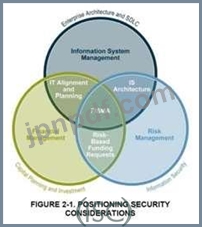
SDLC Positioning in the enterprise
Information system security processes and activities provide valuable input into managing IT systems and their development, enabling risk identification, planning and mitigation. A risk management approach involves continually balancing the protection of agency information and assets with the cost of security controls and mitigation strategies throughout the complete information system development life cycle (see Figure 2-1 above). The most effective way to implement risk management is to identify critical assets and operations, as well as systemic vulnerabilities across the agency. Risks are shared and not bound by organization, revenue source, or topologies. Identification and verification of critical assets and operations and their interconnections can be achieved through the system security planning process, as well as through the compilation of information from the Capital Planning and Investment Control (CPIC) and Enterprise Architecture (EA) processes to establish insight into the agency's vital business operations, their supporting assets, and existing interdependencies and relationships.
With critical assets and operations identified, the organization can and should perform a business impact analysis (BIA). The purpose of the BIA is to relate systems and assets with the critical services they provide and assess the consequences of their disruption. By identifying these systems, an agency can manage security effectively by establishing priorities. This positions the security office to facilitate the IT program's cost- effective performance as well as articulate its business impact and value to the agency.
SDLC OVERVIEW FROM NIST 800-64
SDLC Overview from NIST 800-64 Revision 2
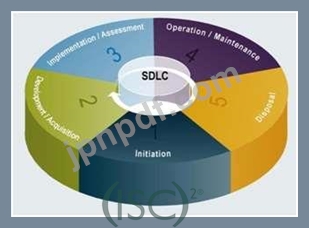
NIST 800-64 Revision 2 is one publication within the NISTstandards that I would recommend you look at for more details about the SDLC. It describe in great details what activities would take place and they have a nice diagram for each of the phases of the SDLC. You will find a copy at:
http://csrc.nist.gov/publications/nistpubs/800-64-Rev2/SP800-64-Revision2.pdf DISCUSSION:
Different sources present slightly different info as far as the phases names are concerned.
People sometimes gets confused with some of the NIST standards. For example NIST 800-64 Security Considerations in the Information System Development Life Cycle has slightly different names, the activities mostly remains the same.
NIST clearly specifies that Security requirements would be considered throughout ALL of the phases. The keyword here is considered, if a question is about which phase they would be developed than Functional Design Analysis would be the correct choice.
Within the NIST standard they use different phase, howeverr under the second phase you will see that they talk specifically about Security Functional requirements analysis which confirms it is not at the initiation stage so it become easier to come out with the answer to this question. Here is what is stated:
The security functional requirements analysis considers the system security environment, including the enterprise information security policy and the enterprise security architecture. The analysis should address all requirements for confidentiality, integrity, and availability of information, and should include a review of all legal, functional, and other security requirements contained in applicable laws, regulations, and guidance.
At the initiation step you would NOT have enough detailed yet to produce the Security Requirements. You are mostly brainstorming on all of the issues listed but you do not develop them all at that stage.
By considering security early in the information system development life cycle (SDLC), you may be able to avoid higher costs later on and develop a more secure system from the start.
NIST says:
NIST`s Information Technology Laboratory recently issued Special Publication (SP) 800-64, Security Considerations in the Information System Development Life Cycle, by Tim Grance, Joan Hash, and Marc Stevens, to help organizations include security requirements in their planning for every phase of the system life cycle, and to select, acquire, and use appropriate and cost-effective security controls.
I must admit this is all very tricky but reading skills and paying attention to KEY WORDS is a must for this exam.
References:
HARRIS, Shon, All-In-One CISSP Certification Exam Guide, McGraw-Hill/Osborne, Fifth Edition, Page 956 and NIST S-64 Revision 2 at http://csrc.nist.gov/publications/nistpubs/800-64-Rev2/SP800-64-Revision2.pdf and
http://www.mks.com/resources/resource-pages/software-development-life-cycle-sdlc-system-development
Explanation
Explanation/Reference:
The software development life cycle (SDLC) (sometimes referred to as the System Development Life Cycle) is the process of creating or altering software systems, and the models and methodologies that people use to develop these systems.
The NIST SP 800-64 revision 2 has within the description section of para 3.2.1:
This section addresses security considerations unique to the second SDLC phase. Key security activities for this phase include:
* Conduct the risk assessment and use the results to supplement the baseline security controls;
* Analyze security requirements;
* Perform functional and security testing;
* Prepare initial documents for system certification and accreditation; and
* Design security architecture.
Reviewing this publication you may want to pick development/acquisition. Although initiation would be a decent choice, it is correct to say during this phase you would only brainstorm the idea of security requirements. Once you start to develop and acquire hardware/software components then you would also develop the security controls for these. The Shon Harris reference below is correct as well.
Shon Harris' Book (All-in-One CISSP Certification Exam Guide) divides the SDLC differently:
Project initiation
Functional design analysis and planning
System design specifications
Software development
Installation
Maintenance support
Revision and replacement
According to the author (Shon Harris), security requirements should be developed during the functional design analysis and planning phase.
SDLC POSITIONING FROM NIST 800-64
SDLC Positioning in the enterprise
Information system security processes and activities provide valuable input into managing IT systems and their development, enabling risk identification, planning and mitigation. A risk management approach involves continually balancing the protection of agency information and assets with the cost of security controls and mitigation strategies throughout the complete information system development life cycle (see Figure 2-1 above). The most effective way to implement risk management is to identify critical assets and operations, as well as systemic vulnerabilities across the agency. Risks are shared and not bound by organization, revenue source, or topologies. Identification and verification of critical assets and operations and their interconnections can be achieved through the system security planning process, as well as through the compilation of information from the Capital Planning and Investment Control (CPIC) and Enterprise Architecture (EA) processes to establish insight into the agency's vital business operations, their supporting assets, and existing interdependencies and relationships.
With critical assets and operations identified, the organization can and should perform a business impact analysis (BIA). The purpose of the BIA is to relate systems and assets with the critical services they provide and assess the consequences of their disruption. By identifying these systems, an agency can manage security effectively by establishing priorities. This positions the security office to facilitate the IT program's cost- effective performance as well as articulate its business impact and value to the agency.
SDLC OVERVIEW FROM NIST 800-64
SDLC Overview from NIST 800-64 Revision 2
NIST 800-64 Revision 2 is one publication within the NISTstandards that I would recommend you look at for more details about the SDLC. It describe in great details what activities would take place and they have a nice diagram for each of the phases of the SDLC. You will find a copy at:
http://csrc.nist.gov/publications/nistpubs/800-64-Rev2/SP800-64-Revision2.pdf DISCUSSION:
Different sources present slightly different info as far as the phases names are concerned.
People sometimes gets confused with some of the NIST standards. For example NIST 800-64 Security Considerations in the Information System Development Life Cycle has slightly different names, the activities mostly remains the same.
NIST clearly specifies that Security requirements would be considered throughout ALL of the phases. The keyword here is considered, if a question is about which phase they would be developed than Functional Design Analysis would be the correct choice.
Within the NIST standard they use different phase, howeverr under the second phase you will see that they talk specifically about Security Functional requirements analysis which confirms it is not at the initiation stage so it become easier to come out with the answer to this question. Here is what is stated:
The security functional requirements analysis considers the system security environment, including the enterprise information security policy and the enterprise security architecture. The analysis should address all requirements for confidentiality, integrity, and availability of information, and should include a review of all legal, functional, and other security requirements contained in applicable laws, regulations, and guidance.
At the initiation step you would NOT have enough detailed yet to produce the Security Requirements. You are mostly brainstorming on all of the issues listed but you do not develop them all at that stage.
By considering security early in the information system development life cycle (SDLC), you may be able to avoid higher costs later on and develop a more secure system from the start.
NIST says:
NIST`s Information Technology Laboratory recently issued Special Publication (SP) 800-64, Security Considerations in the Information System Development Life Cycle, by Tim Grance, Joan Hash, and Marc Stevens, to help organizations include security requirements in their planning for every phase of the system life cycle, and to select, acquire, and use appropriate and cost-effective security controls.
I must admit this is all very tricky but reading skills and paying attention to KEY WORDS is a must for this exam.
References:
HARRIS, Shon, All-In-One CISSP Certification Exam Guide, McGraw-Hill/Osborne, Fifth Edition, Page 956 and NIST S-64 Revision 2 at http://csrc.nist.gov/publications/nistpubs/800-64-Rev2/SP800-64-Revision2.pdf and
http://www.mks.com/resources/resource-pages/software-development-life-cycle-sdlc-system-development

SSCP プレミアム問題集
365日無料更新
専門家プレゼンツ
1338 問題と解答
Windows / Mac / Android / iOS などをサポート
最新 ISC SSCP 試験問題集は GoShiken.com のサポートで SSCP 試験を合格させます!
(40%OFF 特別割引: JPNPDF)
- 最新アップロード
- 107APEGS.NPPE.v2026-09-03.q79
- 107ASIS.ASIS-PSP.v2026-09-03.q195
- 105Microsoft.GH-300.v2026-09-03.q70
- 140Salesforce.AP-208.v2026-09-02.q62
- 163Fortinet.NSE7_FSN_AR-7.6.v2026-09-02.q99
- 134SAP.C_P2WBW_2505.v2026-09-01.q28
- 127HP.HPE0-J81.v2026-09-01.q17
- 153F5.402.v2026-09-01.q52
- 174Lpi.304-200.v2026-08-31.q125
- 133EMC.D-SNC-DY-00.v2026-08-31.q15