

SSCP 試験問題 521
What does "residual risk" mean?
正解: A
Residual risk is "The security risk that remains after controls have been implemented" ISO/IEC TR 13335-1 Guidelines for the Management of IT Security (GMITS), Part 1: Concepts and Models for IT Security, 1996. "Weakness of an assets which can be exploited by a threat" is vulnerability. "The result of unwanted incident" is impact. Risk that remains after risk analysis has been performed is a distracter.
Risk can never be eliminated nor avoided, but it can be mitigated, transferred or accpeted. Even after applying a countermeasure like for example putiing up an Antivirus. But still it is not 100% that systems will be protected by antivirus.
Risk can never be eliminated nor avoided, but it can be mitigated, transferred or accpeted. Even after applying a countermeasure like for example putiing up an Antivirus. But still it is not 100% that systems will be protected by antivirus.
SSCP 試験問題 522
In an organization, an Information Technology security function should:
正解: C
Section: Security Operation Adimnistration
Explanation/Reference:
In order to offer more independence and get more attention from management, an IT security function should be independent from IT and report directly to the CEO. Having it report to a specialized business unit (e.g.
legal) is not recommended as it promotes a low technology view of the function and leads people to believe that it is someone else's problem.
Source: HARE, Chris, Security management Practices CISSP Open Study Guide, version 1.0, april 1999.
Explanation/Reference:
In order to offer more independence and get more attention from management, an IT security function should be independent from IT and report directly to the CEO. Having it report to a specialized business unit (e.g.
legal) is not recommended as it promotes a low technology view of the function and leads people to believe that it is someone else's problem.
Source: HARE, Chris, Security management Practices CISSP Open Study Guide, version 1.0, april 1999.
SSCP 試験問題 523
What is the proper term to refer to a single unit of IP data?
正解: B
IP is a datagram based technology.
DIFFERENCE BETWEEN PACKETS AND DATAGRAM
As specified at: http://en.wikipedia.org/wiki/Packet_(information_technology)
In general, the term packet applies to any message formatted as a packet, while the term
datagram is generally reserved for packets of an "unreliable" service.
A "reliable" service is one that notifies the user if delivery fails, while an "unreliable" one
does not notify the user if delivery fails. For example, IP provides an unreliable service.
Together, TCP and IP provide a reliable service, whereas UDP and IP provide an
unreliable one. All these protocols use packets, but UDP packets are generally called
datagrams.
If a network does not guarantee packet delivery, then it becomes the host's responsibility to
provide reliability by detecting and retransmitting lost packets. Subsequent experience on
the ARPANET indicated that the network itself could not reliably detect all packet delivery
failures, and this pushed responsibility for error detection onto the sending host in any
case. This led to the development of the end-to-end principle, which is one of the Internet's
fundamental design assumptions.
The following answers are incorrect:
IP segment. Is incorrect because IP segment is a detractor, the correct terminology is TCP
segment. IP is a datagram based technology.
IP frame. Is incorrect because IP frame is a detractor, the correct terminology is Ethernet
frame. IP is a datagram based technology.
IP fragment. Is incorrect because IP fragment is a detractor.
References:
Wikipedia http://en.wikipedia.org/wiki/Internet_Protocol
DIFFERENCE BETWEEN PACKETS AND DATAGRAM
As specified at: http://en.wikipedia.org/wiki/Packet_(information_technology)
In general, the term packet applies to any message formatted as a packet, while the term
datagram is generally reserved for packets of an "unreliable" service.
A "reliable" service is one that notifies the user if delivery fails, while an "unreliable" one
does not notify the user if delivery fails. For example, IP provides an unreliable service.
Together, TCP and IP provide a reliable service, whereas UDP and IP provide an
unreliable one. All these protocols use packets, but UDP packets are generally called
datagrams.
If a network does not guarantee packet delivery, then it becomes the host's responsibility to
provide reliability by detecting and retransmitting lost packets. Subsequent experience on
the ARPANET indicated that the network itself could not reliably detect all packet delivery
failures, and this pushed responsibility for error detection onto the sending host in any
case. This led to the development of the end-to-end principle, which is one of the Internet's
fundamental design assumptions.
The following answers are incorrect:
IP segment. Is incorrect because IP segment is a detractor, the correct terminology is TCP
segment. IP is a datagram based technology.
IP frame. Is incorrect because IP frame is a detractor, the correct terminology is Ethernet
frame. IP is a datagram based technology.
IP fragment. Is incorrect because IP fragment is a detractor.
References:
Wikipedia http://en.wikipedia.org/wiki/Internet_Protocol
SSCP 試験問題 524
Passfilt.dll enforces which of the following? (Choose all that apply)
正解: A,C
SSCP 試験問題 525
During which phase of an IT system life cycle are security requirements developed?
正解: C
Section: Security Operation Adimnistration
Explanation/Reference:
The software development life cycle (SDLC) (sometimes referred to as the System Development Life Cycle) is the process of creating or altering software systems, and the models and methodologies that people use to develop these systems.
The NIST SP 800-64 revision 2 has within the description section of para 3.2.1:
This section addresses security considerations unique to the second SDLC phase. Key security activities for this phase include:
* Conduct the risk assessment and use the results to supplement the baseline security controls;
* Analyze security requirements;
* Perform functional and security testing;
* Prepare initial documents for system certification and accreditation; and
* Design security architecture.
Reviewing this publication you may want to pick development/acquisition. Although initiation would be a decent choice, it is correct to say during this phase you would only brainstorm the idea of security requirements. Once you start to develop and acquire hardware/software components then you would also develop the security controls for these. The Shon Harris reference below is correct as well.
Shon Harris' Book (All-in-One CISSP Certification Exam Guide) divides the SDLC differently:
Project initiation
Functional design analysis and planning
System design specifications
Software development
Installation
Maintenance support
Revision and replacement
According to the author (Shon Harris), security requirements should be developed during the functional design analysis and planning phase.
SDLC POSITIONING FROM NIST 800-64
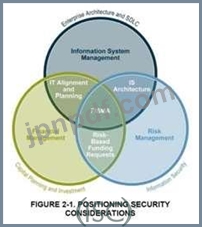
SDLC Positioning in the enterprise
Information system security processes and activities provide valuable input into managing IT systems and their development, enabling risk identification, planning and mitigation. A risk management approach involves continually balancing the protection of agency information and assets with the cost of security controls and mitigation strategies throughout the complete information system development life cycle (see Figure 2-1 above). The most effective way to implement risk management is to identify critical assets and operations, as well as systemic vulnerabilities across the agency. Risks are shared and not bound by organization, revenue source, or topologies. Identification and verification of critical assets and operations and their interconnections can be achieved through the system security planning process, as well as through the compilation of information from the Capital Planning and Investment Control (CPIC) and Enterprise Architecture (EA) processes to establish insight into the agency's vital business operations, their supporting assets, and existing interdependencies and relationships.
With critical assets and operations identified, the organization can and should perform a business impact analysis (BIA). The purpose of the BIA is to relate systems and assets with the critical services they provide and assess the consequences of their disruption. By identifying these systems, an agency can manage security effectively by establishing priorities. This positions the security office to facilitate the IT program's cost- effective performance as well as articulate its business impact and value to the agency.
SDLC OVERVIEW FROM NIST 800-64
SDLC Overview from NIST 800-64 Revision 2
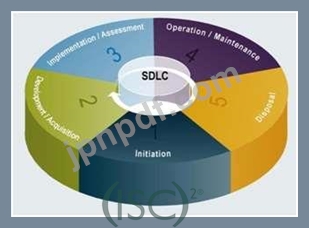
NIST 800-64 Revision 2 is one publication within the NISTstandards that I would recommend you look at for more details about the SDLC. It describe in great details what activities would take place and they have a nice diagram for each of the phases of the SDLC. You will find a copy at:
http://csrc.nist.gov/publications/nistpubs/800-64-Rev2/SP800-64-Revision2.pdf DISCUSSION:
Different sources present slightly different info as far as the phases names are concerned.
People sometimes gets confused with some of the NIST standards. For example NIST 800-64 Security Considerations in the Information System Development Life Cycle has slightly different names, the activities mostly remains the same.
NIST clearly specifies that Security requirements would be considered throughout ALL of the phases. The keyword here is considered, if a question is about which phase they would be developed than Functional Design Analysis would be the correct choice.
Within the NIST standard they use different phase, howeverr under the second phase you will see that they talk specifically about Security Functional requirements analysis which confirms it is not at the initiation stage so it become easier to come out with the answer to this question. Here is what is stated:
The security functional requirements analysis considers the system security environment, including the enterprise information security policy and the enterprise security architecture. The analysis should address all requirements for confidentiality, integrity, and availability of information, and should include a review of all legal, functional, and other security requirements contained in applicable laws, regulations, and guidance.
At the initiation step you would NOT have enough detailed yet to produce the Security Requirements. You are mostly brainstorming on all of the issues listed but you do not develop them all at that stage.
By considering security early in the information system development life cycle (SDLC), you may be able to avoid higher costs later on and develop a more secure system from the start.
NIST says:
NIST`s Information Technology Laboratory recently issued Special Publication (SP) 800-64, Security Considerations in the Information System Development Life Cycle, by Tim Grance, Joan Hash, and Marc Stevens, to help organizations include security requirements in their planning for every phase of the system life cycle, and to select, acquire, and use appropriate and cost-effective security controls.
I must admit this is all very tricky but reading skills and paying attention to KEY WORDS is a must for this exam.
References:
HARRIS, Shon, All-In-One CISSP Certification Exam Guide, McGraw-Hill/Osborne, Fifth Edition, Page 956 and NIST S-64 Revision 2 at http://csrc.nist.gov/publications/nistpubs/800-64-Rev2/SP800-64-Revision2.pdf and
http://www.mks.com/resources/resource-pages/software-development-life-cycle-sdlc-system-development
Explanation/Reference:
The software development life cycle (SDLC) (sometimes referred to as the System Development Life Cycle) is the process of creating or altering software systems, and the models and methodologies that people use to develop these systems.
The NIST SP 800-64 revision 2 has within the description section of para 3.2.1:
This section addresses security considerations unique to the second SDLC phase. Key security activities for this phase include:
* Conduct the risk assessment and use the results to supplement the baseline security controls;
* Analyze security requirements;
* Perform functional and security testing;
* Prepare initial documents for system certification and accreditation; and
* Design security architecture.
Reviewing this publication you may want to pick development/acquisition. Although initiation would be a decent choice, it is correct to say during this phase you would only brainstorm the idea of security requirements. Once you start to develop and acquire hardware/software components then you would also develop the security controls for these. The Shon Harris reference below is correct as well.
Shon Harris' Book (All-in-One CISSP Certification Exam Guide) divides the SDLC differently:
Project initiation
Functional design analysis and planning
System design specifications
Software development
Installation
Maintenance support
Revision and replacement
According to the author (Shon Harris), security requirements should be developed during the functional design analysis and planning phase.
SDLC POSITIONING FROM NIST 800-64
SDLC Positioning in the enterprise
Information system security processes and activities provide valuable input into managing IT systems and their development, enabling risk identification, planning and mitigation. A risk management approach involves continually balancing the protection of agency information and assets with the cost of security controls and mitigation strategies throughout the complete information system development life cycle (see Figure 2-1 above). The most effective way to implement risk management is to identify critical assets and operations, as well as systemic vulnerabilities across the agency. Risks are shared and not bound by organization, revenue source, or topologies. Identification and verification of critical assets and operations and their interconnections can be achieved through the system security planning process, as well as through the compilation of information from the Capital Planning and Investment Control (CPIC) and Enterprise Architecture (EA) processes to establish insight into the agency's vital business operations, their supporting assets, and existing interdependencies and relationships.
With critical assets and operations identified, the organization can and should perform a business impact analysis (BIA). The purpose of the BIA is to relate systems and assets with the critical services they provide and assess the consequences of their disruption. By identifying these systems, an agency can manage security effectively by establishing priorities. This positions the security office to facilitate the IT program's cost- effective performance as well as articulate its business impact and value to the agency.
SDLC OVERVIEW FROM NIST 800-64
SDLC Overview from NIST 800-64 Revision 2
NIST 800-64 Revision 2 is one publication within the NISTstandards that I would recommend you look at for more details about the SDLC. It describe in great details what activities would take place and they have a nice diagram for each of the phases of the SDLC. You will find a copy at:
http://csrc.nist.gov/publications/nistpubs/800-64-Rev2/SP800-64-Revision2.pdf DISCUSSION:
Different sources present slightly different info as far as the phases names are concerned.
People sometimes gets confused with some of the NIST standards. For example NIST 800-64 Security Considerations in the Information System Development Life Cycle has slightly different names, the activities mostly remains the same.
NIST clearly specifies that Security requirements would be considered throughout ALL of the phases. The keyword here is considered, if a question is about which phase they would be developed than Functional Design Analysis would be the correct choice.
Within the NIST standard they use different phase, howeverr under the second phase you will see that they talk specifically about Security Functional requirements analysis which confirms it is not at the initiation stage so it become easier to come out with the answer to this question. Here is what is stated:
The security functional requirements analysis considers the system security environment, including the enterprise information security policy and the enterprise security architecture. The analysis should address all requirements for confidentiality, integrity, and availability of information, and should include a review of all legal, functional, and other security requirements contained in applicable laws, regulations, and guidance.
At the initiation step you would NOT have enough detailed yet to produce the Security Requirements. You are mostly brainstorming on all of the issues listed but you do not develop them all at that stage.
By considering security early in the information system development life cycle (SDLC), you may be able to avoid higher costs later on and develop a more secure system from the start.
NIST says:
NIST`s Information Technology Laboratory recently issued Special Publication (SP) 800-64, Security Considerations in the Information System Development Life Cycle, by Tim Grance, Joan Hash, and Marc Stevens, to help organizations include security requirements in their planning for every phase of the system life cycle, and to select, acquire, and use appropriate and cost-effective security controls.
I must admit this is all very tricky but reading skills and paying attention to KEY WORDS is a must for this exam.
References:
HARRIS, Shon, All-In-One CISSP Certification Exam Guide, McGraw-Hill/Osborne, Fifth Edition, Page 956 and NIST S-64 Revision 2 at http://csrc.nist.gov/publications/nistpubs/800-64-Rev2/SP800-64-Revision2.pdf and
http://www.mks.com/resources/resource-pages/software-development-life-cycle-sdlc-system-development

SSCP プレミアム問題集
365日無料更新
専門家プレゼンツ
1338 問題と解答
Windows / Mac / Android / iOS などをサポート
最新 ISC SSCP 試験問題集は GoShiken.com のサポートで SSCP 試験を合格させます!
(40%OFF 特別割引: JPNPDF)
- 最新アップロード
- 107APEGS.NPPE.v2026-09-03.q79
- 108ASIS.ASIS-PSP.v2026-09-03.q195
- 107Microsoft.GH-300.v2026-09-03.q70
- 140Salesforce.AP-208.v2026-09-02.q62
- 163Fortinet.NSE7_FSN_AR-7.6.v2026-09-02.q99
- 134SAP.C_P2WBW_2505.v2026-09-01.q28
- 128HP.HPE0-J81.v2026-09-01.q17
- 153F5.402.v2026-09-01.q52
- 174Lpi.304-200.v2026-08-31.q125
- 134EMC.D-SNC-DY-00.v2026-08-31.q15